

Introduction
Every baseball player understands the value of a strong, reliable throwing arm—especially pitchers. However, building a pitcher’s arm is not simply about throwing harder or more often. It is a long-term process that requires proper training, sound mechanics, and intentional recovery. With the right approach, pitchers can safely improve arm strength, velocity, and accuracy while reducing the risk of injury. In this guide, we’ll break down the most effective methods to develop a stronger, more durable pitching arm.
1. Start With a Proper Warm-Up Routine
A thorough warm-up is essential before any throwing or pitching session. Warming up increases blood flow, improves mobility, and prepares the muscles and joints for high-intensity movement. Begin with light cardio such as jogging, followed by dynamic movements like arm circles, leg swings, walking high knees, and butt kicks. A proper warm-up not only enhances performance but also significantly lowers the risk of strains and overuse injuries.
2. Build Strength Through Resistance Training

Strength training plays a key role in developing a powerful throwing arm. Focus on exercises that target the shoulders, upper back, and core—areas critical for throwing efficiency and stability. Effective movements include lat pulldowns, cable rows, bench presses, and shoulder presses. When gym access is limited, resistance bands provide an excellent alternative for maintaining shoulder strength and control. Always prioritize proper form and controlled movements over heavy weight.
3. Refine and Maintain Proper Throwing Mechanics

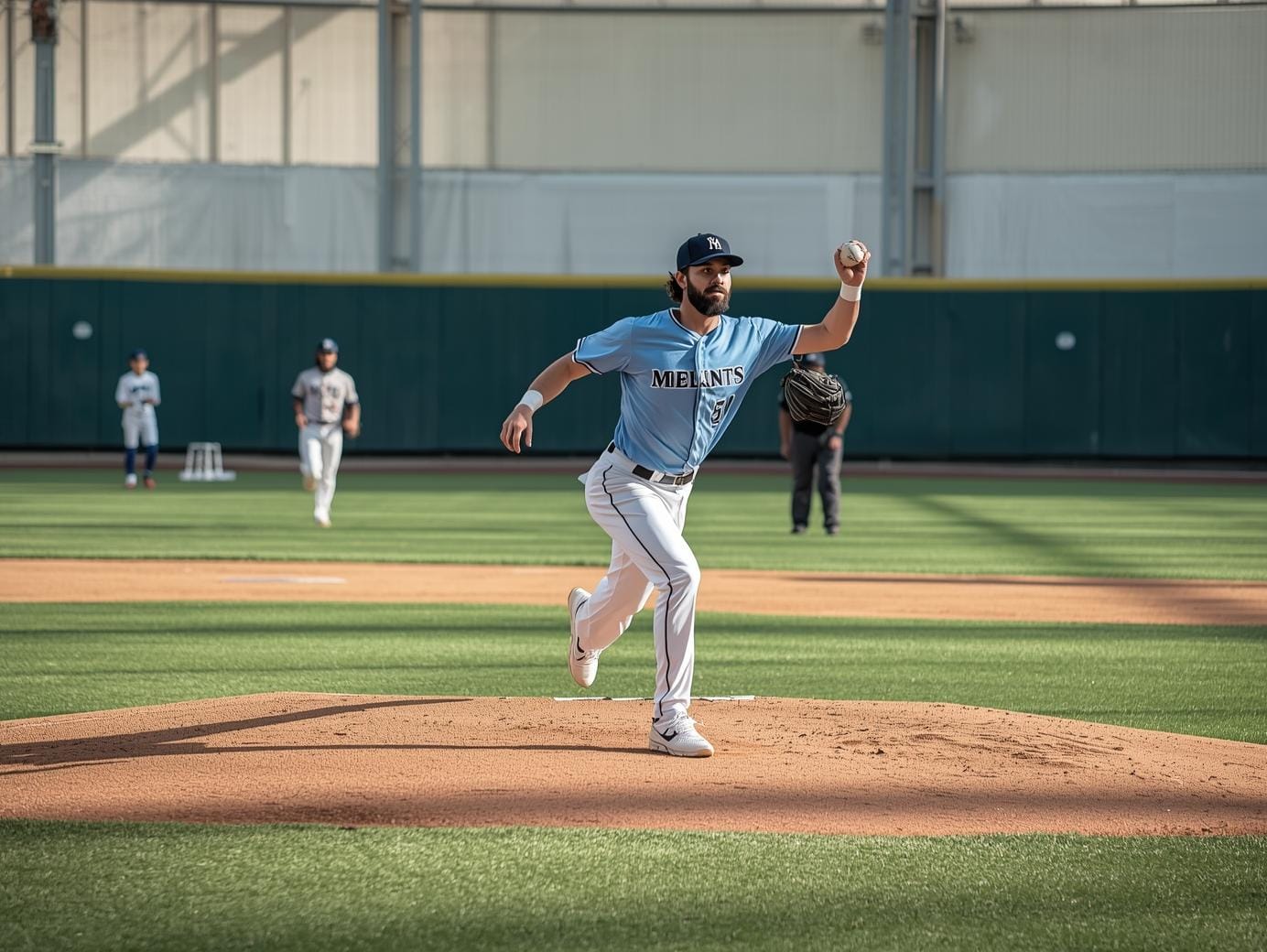
Even the strongest arm will underperform without proper mechanics. Efficient throwing form allows pitchers to generate power while minimizing stress on the elbow and shoulder. Key elements include grip, elbow alignment, hip-to-shoulder separation, and a smooth follow-through. Working with a coach or knowledgeable teammate can help identify mechanical flaws and correct them early. Consistent practice with sound mechanics is one of the most effective ways to improve both velocity and accuracy.
4. Incorporate Plyometric and Explosive Drills
Plyometric training helps convert strength into explosive power—an essential component of pitching velocity. Exercises such as medicine ball throws, box jumps, and power skips train the body to produce force quickly. These drills improve coordination and energy transfer from the lower body through the arm, resulting in a more powerful and efficient throw.
5. Prioritize Rest, Recovery, and Arm Care

Rest and recovery are just as important as training. Muscles grow stronger during recovery, not during workouts. Overworking the arm without adequate rest can lead to fatigue, decreased performance, and injury. Pay close attention to any discomfort or pain, and don’t hesitate to take time off when needed. Quality sleep, proper nutrition, hydration, and light recovery work such as stretching or mobility exercises all contribute to long-term arm health.
Conclusion
Developing a strong pitching arm is a continuous process that demands discipline, patience, and consistency. By committing to proper warm-ups, structured strength training, refined mechanics, explosive drills, and adequate recovery, pitchers can safely elevate their performance. Listen to your body, trust the process, and stay consistent. With time and smart training, you can build a stronger, more resilient pitching arm and become a greater asset to your team.