

How to Select the Perfect Baseball Glove
Choosing the right baseball glove is one of the most important decisions a player can make. A properly selected glove improves comfort, performance, control, and confidence on the field. With so many options available—different sizes, materials, pocket styles, and web designs—it can feel overwhelming to find the perfect fit. By understanding key factors such as your playing position, hand size, throwing style, and personal preferences, you can confidently select a glove that enhances your game.
1. Choose Based on Your Position
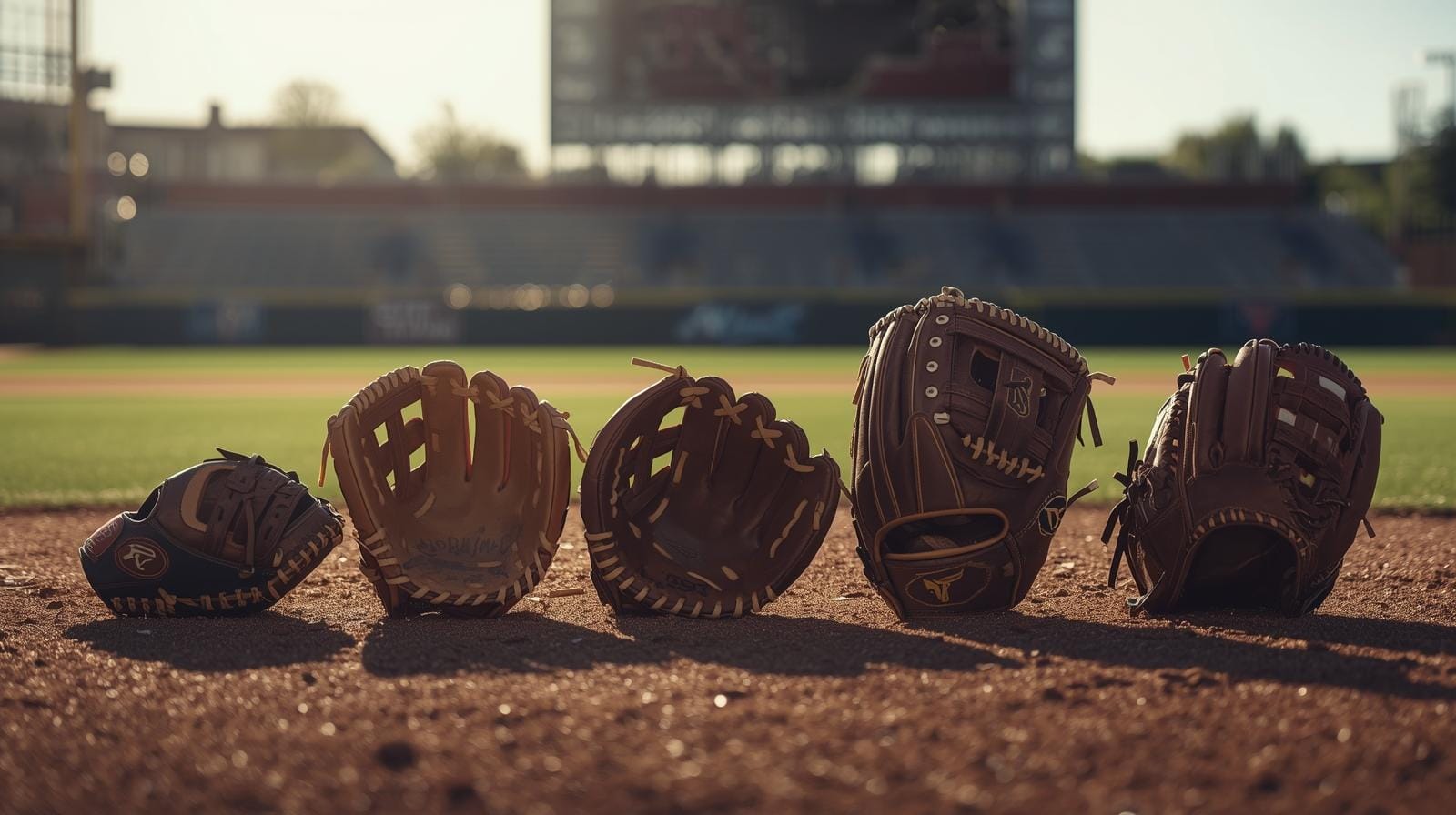
Your position on the field plays a major role in determining the type of glove you need. Each position demands specific features to support performance and efficiency.
- Infielders typically use smaller gloves, usually ranging from 11 to 12 inches. These gloves feature a shallow pocket that allows for quicker ball transfers, faster throws, and better control during fast-paced plays.
- Outfielders benefit from larger gloves, generally 12.5 to 13 inches, with deeper pockets. These gloves help track down fly balls, make diving catches, and secure the ball at full extension.
- Pitchers often prefer gloves between 11.5 and 12.5 inches with a closed web design. This helps conceal grip changes and pitch selection from opposing hitters.
- First basemen use a specialized mitt, typically 12 to 13 inches, designed with an elongated shape and deep pocket to scoop low throws and secure fast catches.
- Catchers require heavily padded catcher’s mitts, ranging from 32 to 34 inches, to absorb high-velocity pitches and protect the hand.
Selecting the correct glove for your position ensures proper functionality and improves your overall defensive performance.
2. Find the Right Fit for Your Hand
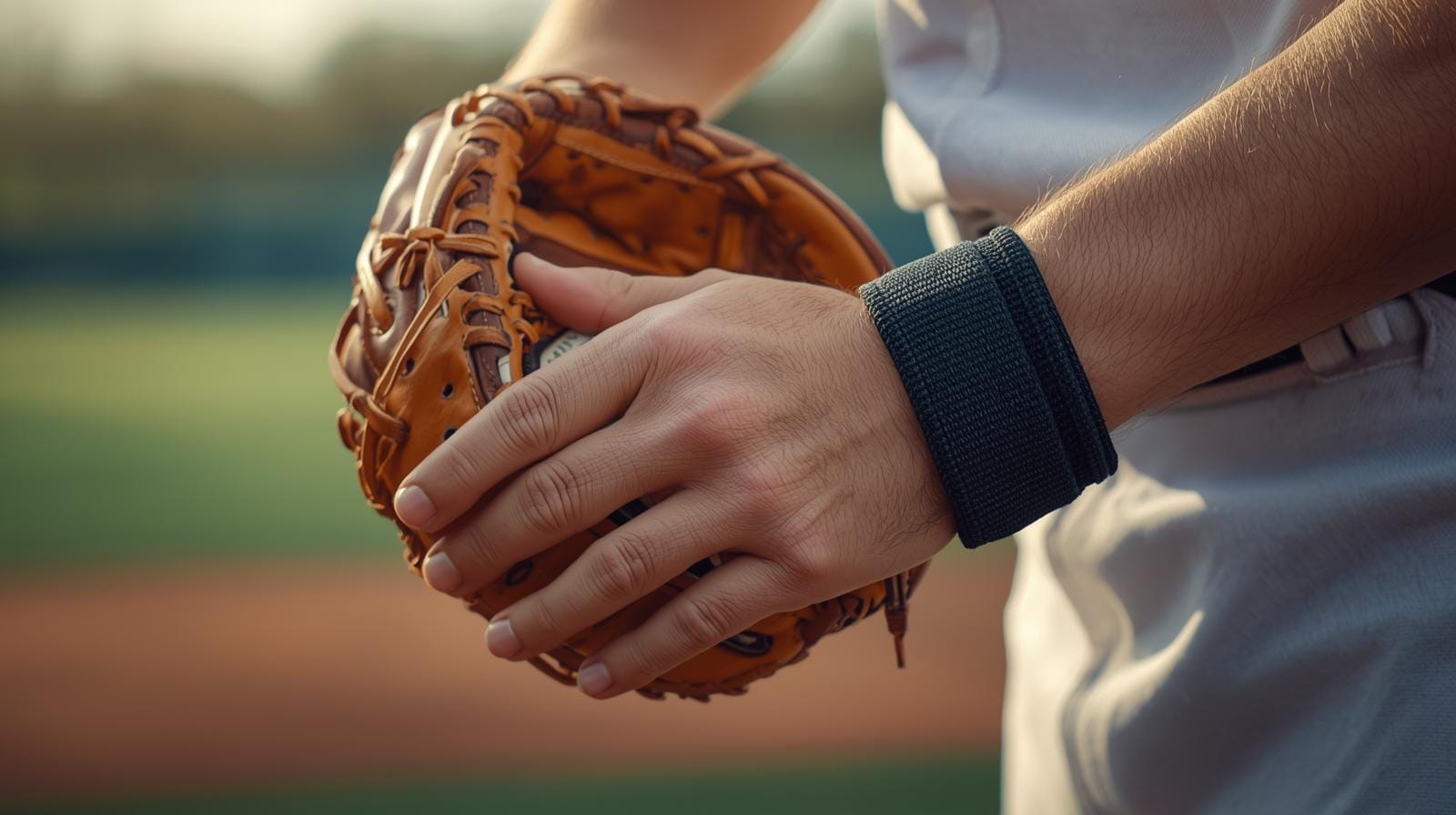
A glove that fits properly is essential for comfort and control. When trying on gloves, pay attention to how the glove feels on your hand and wrist.
- The glove should fit snugly without feeling tight or restrictive.
- There should be minimal extra space in the fingertips.
- Wrist straps should secure the glove firmly without cutting off circulation.
- Younger players should avoid oversized gloves, as they reduce control and slow development.
If possible, try on several sizes and models to determine what feels most natural. A properly fitted glove will improve grip, confidence, and fielding consistency.
3. Consider Pocket Depth and Web Style
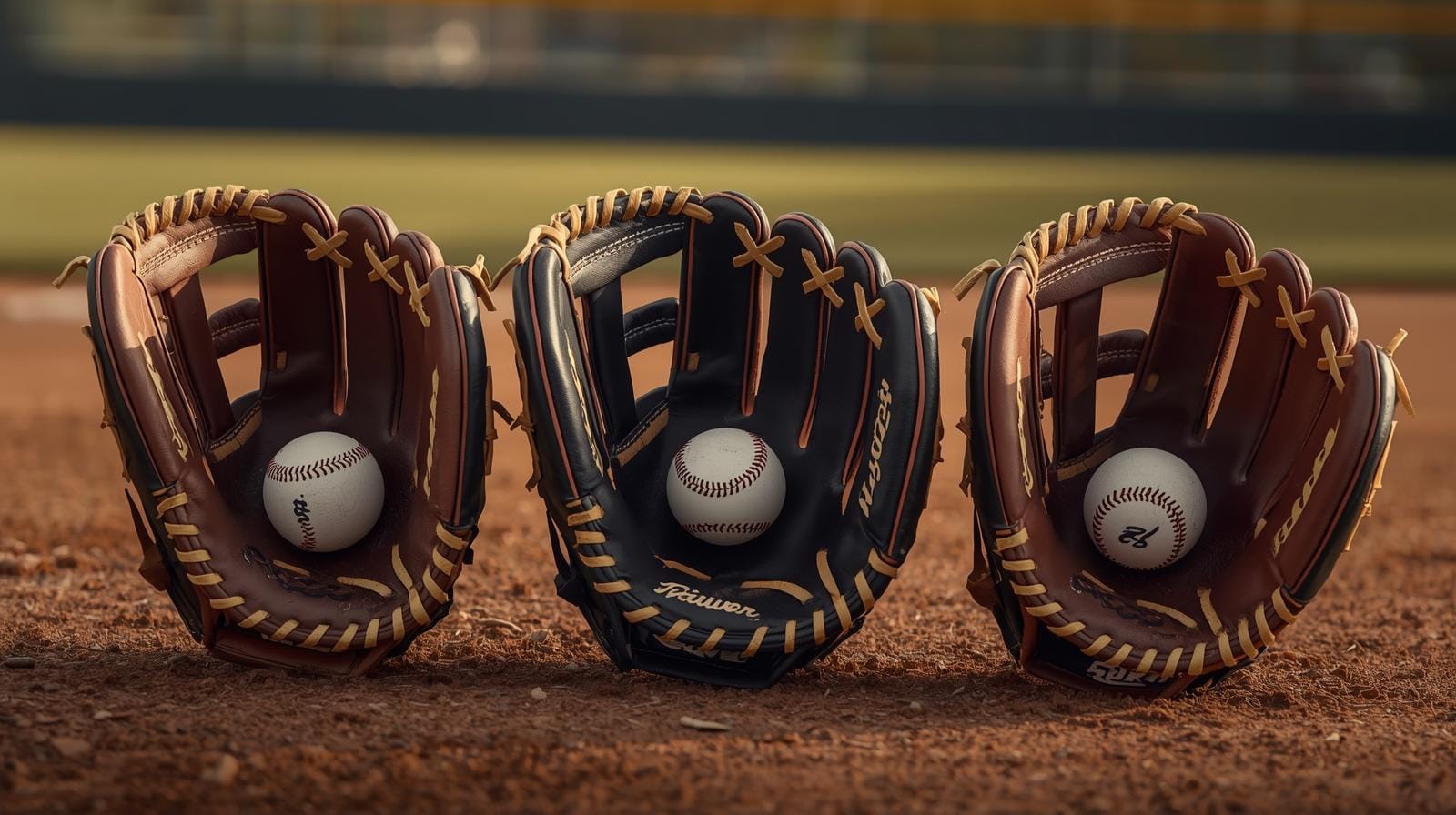
Pocket depth and web design significantly influence how the glove performs.
- Shallow pockets allow for faster ball release, ideal for infielders.
- Deeper pockets provide better ball security, preferred by outfielders and pitchers.
Web styles also serve different purposes:
- I-web and H-web designs are popular among infielders for quick ball visibility and fast transfers.
- Trapeze and modified trapeze webs are common among outfielders for deeper pockets and extended reach.
- Closed webs are ideal for pitchers to hide grip changes.
Selecting the right combination of pocket depth and web style enhances control, reaction time, and efficiency.
4. Choose the Right Leather Type
Glove leather affects feel, durability, and break-in time.
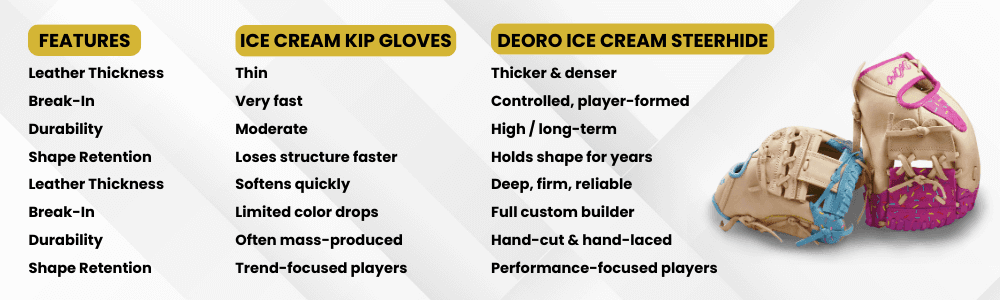
- Steerhide leather offers excellent durability and structure, ideal for competitive players.
- Kip leather is lighter, softer, and used in premium gloves, providing faster break-in and enhanced feel.
- Synthetic materials are lighter and more affordable, making them suitable for beginners and younger players.
Higher-quality leather typically lasts longer and maintains shape better, making it a worthwhile investment for serious players.
5. Understand Throwing Hand Orientation
Gloves are labeled based on the throwing hand:
- Right-hand throw (RHT): Worn on the left hand.
- Left-hand throw (LHT): Worn on the right hand.
Choosing the correct orientation ensures proper throwing mechanics and comfort.
6. Factor in Skill Level and Budget
Beginner players may benefit from softer, pre-broken-in gloves that are game-ready right away. Advanced players often prefer stiffer gloves that can be broken in to their exact preferences, providing better long-term performance and durability.
While premium gloves offer superior craftsmanship and longevity, many mid-range options deliver excellent performance at a more accessible price point. Balance your budget with quality to find the best value.
Final Thoughts
Selecting the right baseball glove is about more than just size—it’s about finding the perfect balance between comfort, performance, and position-specific functionality. By carefully considering your playing position, hand size, pocket style, leather type, and experience level, you can invest in a glove that enhances your skills and supports your development.
A well-chosen glove not only improves your defensive ability but also builds confidence every time you step onto the field. Choose wisely, break it in properly, and let your glove become an extension of your game.