

Pitch Perfect: A Complete Guide to Baseball Pitch Types
Introduction
Baseball is a game of skill, strategy, and athletic precision. For pitchers, success depends not only on throwing strikes, but on understanding which pitch to throw and when to throw it. Each pitch serves a specific purpose—some are foundational and easier to learn, while others demand years of refinement and control. In this guide, we’ll break down the most common types of baseball pitches and explain how they are used effectively in game situations.
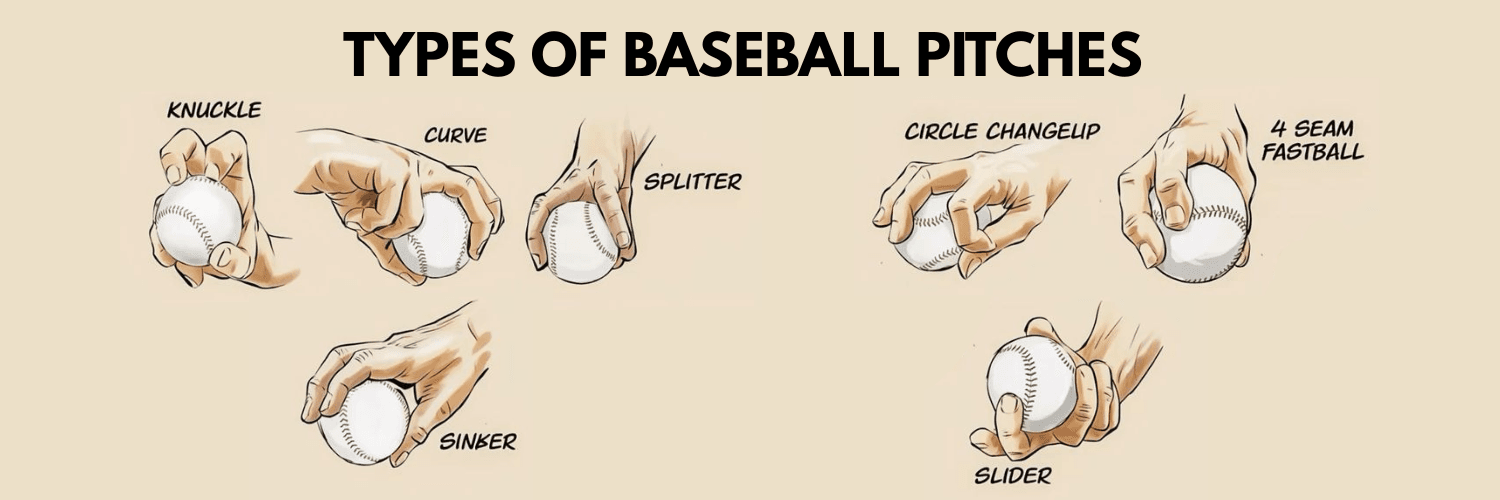
Types of Baseball Pitches
1. Fastball
The fastball is the most common and essential pitch in baseball. It focuses on velocity and control, with pitchers aiming for the corners or different levels of the strike zone to challenge hitters. Fastballs set the tone for an at-bat and are often used to establish dominance early. Common variations include the four-seam fastball, two-seam fastball, and cut fastball.
2. Curveball
The curveball relies on spin to create sharp downward or lateral movement before reaching the plate. It is one of the more challenging pitches to master, but highly effective when executed correctly. The key to a successful curveball is deception—disrupting the hitter’s timing and eye level. Popular variations include the 12–6 curveball and the slider.
3. Changeup
A changeup is designed to look like a fastball but arrive significantly slower. Thrown with the same arm speed as a fastball, it causes hitters to swing too early, often resulting in weak contact or misses. While extremely effective, the changeup must be used strategically to avoid predictability.
4. Knuckleball
The knuckleball is one of the most unpredictable pitches in baseball. Thrown with minimal spin using the fingertips, it produces an erratic, fluttering movement that can be difficult for both hitters and catchers to track. Although challenging to control, a well-thrown knuckleball can completely disrupt a hitter’s rhythm.
5. Split-Finger Fastball
The split-finger fastball, or splitter, is gripped between the index and middle fingers, causing the ball to drop sharply as it approaches the plate. It is especially effective against hitters who handle traditional fastballs well, often generating swings and misses when placed correctly. Like many advanced pitches, it requires precise mechanics and control.
Conclusion
Whether you are a beginner or a seasoned pitcher, understanding the different types of baseball pitches is essential to your development. Mastery comes through consistent practice, proper mechanics, and learning how to apply each pitch in the right situation. By experimenting with various pitches and refining your strengths, you can develop a pitching style that sets you apart. Commit to the process, trust your training, and continue sharpening the art of pitching—one throw at a time.